

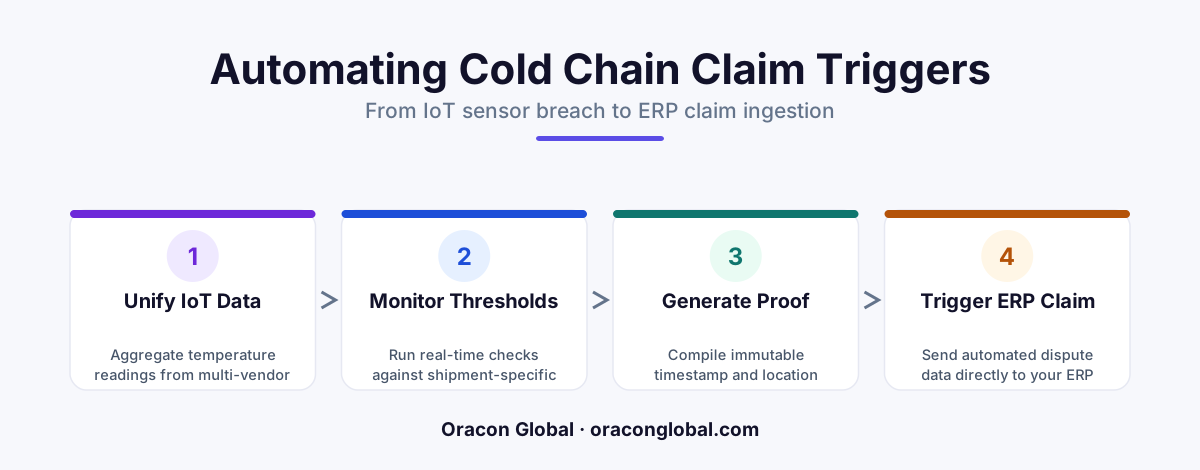
Fragmented IoT hardware makes cold chain compliance difficult to audit. By building an independent data ingestion layer, you can normalize temperature telemetry from any vendor sensor and programmatically trigger ERP insurance claims the moment a threshold is breached.
In cold chain logistics, a single temperature spike can ruin a shipment worth hundreds of thousands of dollars. Whether you are managing pharmaceuticals, fresh produce, or chemical compounds, maintaining strict thermal thresholds is non-negotiable. Yet, when a cooling unit fails, the process of recovering losses is often slow and manual.
Most logistics operations rely on multiple third-party transportation providers and a mixed fleet of refrigerated trucks, shipping containers, and warehouses. Each uses different IoT hardware. The result is a fragmented mess of proprietary portals, PDF reports, and disconnected data. By the time your operations team identifies a breach, downloads the logs, and files a claim in your ERP, weeks have passed, and the window for clear liability has closed.
The solution is to decouple your data from the hardware vendors. By building a custom cold chain monitoring pipeline, you can ingest telemetry from any sensor, normalize it in real time, and use deterministic business logic to trigger automated ERP claims the second a threshold fails.
The Problem with Vendor Lock-In and Fragmented IoT Data
Hardware manufacturers want you to use their proprietary dashboards. While those dashboards work well if you use only one brand of sensor, they quickly fall apart in real-world supply chains. You might use fixed sensors from one vendor in your main distribution centers, Bluetooth beacons from another for last-mile delivery, and cellular GPS trackers from a third-party carrier for ocean freight.
Trying to manage this fragmentation leads to severe operational bottlenecks:
- Manual data reconciliation: Operators must log into three or four different portals to verify if a shipment stayed cold during its entire journey.
- Delayed claim filing: Claims for spoiled cargo require concrete proof. Gathering, exporting, and attaching PDF temperature logs to an ERP ticket takes days.
- Missed liability windows: Many insurance policies and carrier contracts require cargo claims to be initiated within 24 to 48 hours of delivery. Manual delays result in lost payouts.
To automate your operations, you need an independent software layer that treats hardware simply as a data source.
Architecting a Unified Multi-Vendor Ingestion Layer
To build a system that automates claims, you must first centralize your data. Instead of connecting your ERP directly to multiple sensor APIs, you should build a lightweight, custom middleware layer. This middle tier handles three critical tasks: ingestion, normalization, and evaluation.
1. Universal Data Ingestion
Your middleware exposes secure API endpoints (webhooks) to receive telemetry from different hardware vendors. For legacy sensors that do not support live webhooks, the ingestion layer can periodically poll vendor APIs or parse automated CSV email reports sent by cargo hubs.
2. Telemetry Normalization
Different sensors output data in different formats. Vendor A might report temperature in Fahrenheit as a nested JSON object, while Vendor B reports Celsius in an XML payload. The normalization engine parses these varying payloads into a standardized database schema containing simple, universal variables: Timestamp, Location, Sensor ID, Shipment ID, and Temperature (normalized to Celsius).
3. The Validation Buffer
Sensors can experience temporary connection drops or brief, harmless anomalies (such as a door opening for ten seconds during loading). Triggering an ERP claim on a single bad reading creates administrative chaos. The middleware must run the data through a validation buffer. It verifies if a threshold breach is sustained—for example, staying above 4 degrees Celsius for more than 15 consecutive minutes—before classifying it as a failure.
Connecting Telemetry Failures to Your ERP Claims Workflow
Once a genuine threshold failure is validated, the middleware translates this physical event into a digital action within your ERP system. This is where automated cold chain claims save significant administrative overhead.
The automation engine executes a structured, step-by-step workflow:
- Match Sensor to Shipment: The system looks up the active sensor ID in your database to identify the specific bill of lading, customer order, and carrier responsible for the journey.
- Compile the Proof: The system automatically extracts the exact time window of the temperature breach and generates a clean, immutable cryptographic log of the telemetry data.
- Generate the ERP Payload: Using your ERP's API (whether you run SAP, NetSuite, Dynamics, or an in-house system), the engine posts a new claim record. It pre-populates the claim with the carrier details, contract terms, financial value of the ruined SKUs, and the digital proof of the temperature breach.
- Alert the Operations Team: While the claim is filed automatically, the system triggers a high-priority notification to your logistics managers so they can quickly arrange a replacement shipment for the customer.
By automating the claim creation, you eliminate human error, guarantee that claims are filed within contract compliance windows, and free your operations team to focus on customer service rather than manual data entry.
Designing for Resiliency: Offline Buffering and Schema Drift
When building a custom sensor integration, your software must be designed to handle the unpredictable nature of real-world logistics. Ships pass through areas with zero cellular coverage, and warehouses experience network drops.
To ensure your automated claims system remains reliable, your custom architecture should include two key safeguards:
Local Buffer and Deduplication
When connection is lost, sensors and local gateways store data offline. Once they reconnect, they often dump hours of buffered telemetry in a single, high-volume batch. Your ingestion layer must use an event queue to handle these sudden bursts of historical data without crashing. It must also run deduplication checks to ensure the same sensor readings are not processed twice.
Schema Versioning
Hardware vendors frequently update their software, which can silently change the structure of the data they send you. Your custom ingestion layer should use strict API schemas that flag unexpected payload changes. If a vendor changes their data structure, the system isolates those readings in a holding queue and alerts your technical team, preventing broken pipelines from stopping your broader operations.
Owning Your Supply Chain Data
Building a custom monitoring and claim automation tool does more than just save time—it gives you complete ownership of your operational data. Instead of paying ongoing subscription fees for multiple closed software platforms, you own the intellectual property and can adapt the system as your fleet grows.
With a centralized data store of every temperature reading across all carriers and warehouses, you gain powerful analytics. You can easily spot which carriers consistently fail to maintain temperature, which shipping routes are most prone to delays, and which cooling units are nearing the end of their lifecycle.
At Oracon Global, we build custom web platforms, IoT integrations, and automation systems that connect complex field operations directly to core business software. Our senior, in-house team designs robust, production-ready systems where our clients retain 100% ownership of their code and IP.
If you want to streamline your logistics, eliminate manual administrative tasks, and secure your supply chain data, contact Oracon Global today to discuss your project.
Frequently asked questions
Why can't we use the software provided by our IoT hardware vendors?
Hardware vendors build proprietary software designed to lock you into their ecosystem. If you use multiple sensor brands across your fleet or warehouses, you end up with fragmented data silos that cannot easily talk to a single ERP system.
Which ERP systems can support automated temperature claims?
Any ERP with a modern REST or SOAP API (such as SAP, NetSuite, Microsoft Dynamics, or a custom-built ERP) can receive automated claims payloads once your middleware normalizes the incoming IoT data.
How do you prevent false claims if a sensor momentarily glitches?
The system uses a validation buffer. Instead of triggering a claim on a single spikes, the telemetry processor verifies if the temperature stayed outside the safe threshold for a sustained, configurable period (e.g., 15 consecutive minutes).
Do we need to replace our existing temperature sensors to build this?
No. A custom ingestion layer is designed to aggregate data from your existing mix of Bluetooth beacons, cellular trackers, and fixed warehouse data loggers without requiring new hardware.
Read next
Beyond Chatbots: How to Build AI Agents That Actually Do Work for Your Business
Most businesses use AI to answer questions. Here is how to build custom AI agents that actually take action, connect to your internal tools, and handle complex workflows.
Beyond the Wrapper: How to Build Custom AI Agents for Business That Actually Work
Many businesses invest in basic AI wrappers only to find they lack the security and context needed for real work. Here is how to build custom AI agents that integrate deeply with your workflows and databases.
Enterprise AI Maintenance Costs: Budgeting for Year Two and Beyond
Building an AI system is only half the battle. Discover the practical, ongoing operational costs of enterprise AI, including token management, model drift, and continuous security audits.
Oracon Global builds production-grade AI agents, automation and apps — and you own the code and IP. Tell us what you want to automate.
Book a call →See our work