

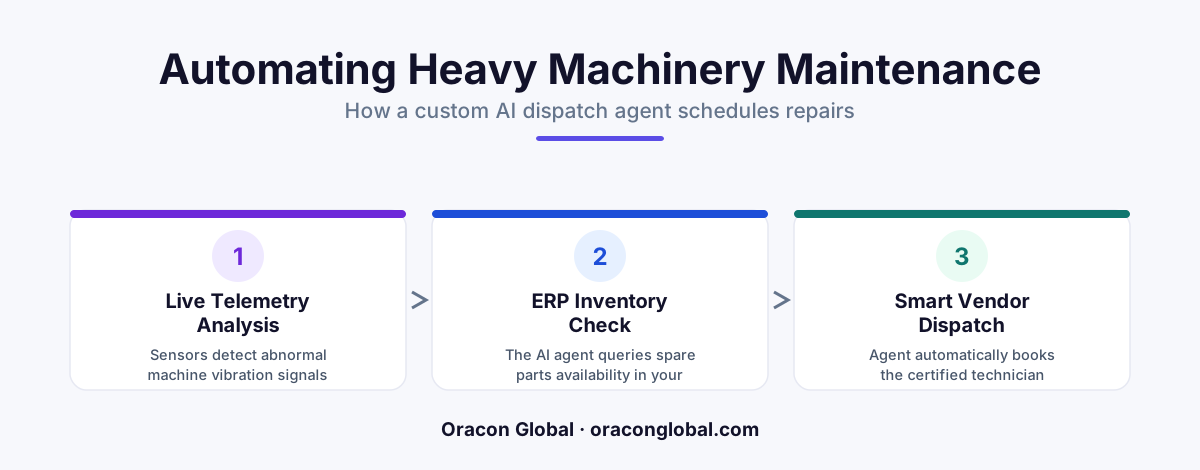
This guide outlines the architecture for a custom AI dispatch agent that monitors real-time IoT vibration sensors on heavy machinery. When anomalies are detected, the agent queries ERP inventory for parts, checks technician availability, and schedules maintenance automatically to eliminate manual coordination delays.
Unplanned downtime in industrial operations is incredibly expensive. When heavy machinery fails unexpectedly, the ripple effects hit production schedules, supply chain commitments, and labor efficiency. Traditionally, maintenance is either reactive—waiting for a machine to break—or strictly calendar-based, which often leads to unnecessary servicing or missed warning signs.
The solution lies in heavy machinery maintenance automation. By building a custom dispatch agent that connects real-time vibration telemetry directly to your ERP parts inventory, you can automate the entire diagnostic, sourcing, and dispatch lifecycle. Instead of waiting for a manual operator to spot a wear pattern, write a ticket, check the warehouse, and call a technician, an intelligent agent can handle the workflow in minutes.
Here is how to design and build a robust predictive maintenance AI agent that bridges physical IoT hardware with enterprise transactional databases.
The Core Challenge: Bridging Physical Telemetry and Enterprise Data
Most industrial operations already have some form of real-time vibration telemetry. Sensors attached to pumps, motors, and gearboxes constantly stream high-frequency data. Similarly, operations teams rely on ERP systems to track spare parts and dispatch logs.
However, these two systems rarely talk to each other. When a vibration sensor flags an anomalous frequency wave, it typically triggers a generic dashboard alert. A human supervisor must then notice the alert, log into the ERP to check if the correct bearings or seals are in stock, and then coordinate with internal or external maintenance vendors.
A custom AI dispatch agent acts as the active tissue between these disconnected systems. It monitors the sensor stream, understands the mechanical context of the anomaly, checks inventory, and books the repair without human intervention.
Step 1: Ingesting Telemetry and Detecting True Anomalies
High-frequency vibration telemetry produces massive volumes of data. Feeding raw sensor streams directly into an LLM is cost-prohibitive and technically inefficient. Instead, the architecture uses a dedicated edge processing layer or a time-series database to filter the noise.
- Edge Filtering: Raw accelerometers measure G-forces across multiple axes. The system converts these signals into velocity RMS or Peak Acceleration values.
- Threshold Triggering: When these metrics cross established ISO vibration severity thresholds, the system generates a structured alert payload.
- Semantic Payload Creation: This alert—containing the machine ID, the specific bearing axis showing wear, and the severity level—is sent to the AI agent's intake queue.
Step 2: Checking ERP Inventory via API Integration
Once the agent receives a verified alert, its first task is to determine what parts are required for the repair. A smart agent does not guess; it references your deterministic engineering manuals and live ERP inventory integration.
The agent executes a structured database query or API call to your ERP (such as SAP, NetSuite, or a custom-built system) to verify stock levels. It looks up the specific bill of materials (BOM) for the flagged machinery model. If the required bearing is in stock at the local warehouse, the agent reserves it immediately to prevent another team from claiming it. If the part is out of stock, the agent queries the ERP's purchasing module to find the fastest lead-time vendor and drafts a purchase requisition for manager approval.
Step 3: Orchestrating the Multi-Vendor Dispatch Logic
With parts secured, the agent must coordinate the physical repair. Because heavy machinery often requires specialized certifications, the agent must evaluate technician compatibility. This is where industrial IoT dispatch agent intelligence excels.
The agent queries your internal technician scheduling database alongside external service vendor APIs. It evaluates several key parameters:
- Certifications: Does the available technician have the exact safety and mechanical certifications required for this specific class of machinery?
- Proximity and SLA: Who is closest to the physical site, and what are the active service level agreements?
- Tooling Availability: Are the specialized calibration tools required for the job registered to the dispatched service van?
Once the optimal candidate is identified, the agent draft-schedules the work order, packages the diagnostic vibration data into a clean summary, and sends a dispatch request via email, SMS, or a dedicated field-service app.
Step 4: Ensuring Deterministic Guardrails and Human Overrides
Giving an autonomous agent the power to order expensive industrial parts and dispatch high-rate external contractors requires strict guardrails. The agent's software architecture must rely on a robust state machine rather than open-ended prompt logic.
"An AI agent in an industrial setting should never have the final say on high-risk, high-cost transactions. It must operate within a deterministic framework where human engineers can review and veto actions easily."
For example, if the estimated cost of the replacement parts and vendor labor exceeds a pre-set threshold (e.g., $5,000), the state machine halts the autonomous workflow. It routes a comprehensive summary packet to the regional maintenance manager's dashboard. The manager can approve the entire pre-planned ticket with a single click, allowing the agent to resume its automated booking and inventory reservation duties.
Building vs. Buying Your Industrial AI Infrastructure
Off-the-shelf maintenance software often claims to have "AI features," but these are typically generic predictive dashboards that require manual follow-through. A truly automated operation requires a custom build tailored to your specific fleet, your exact ERP schemas, and your unique vendor contracts.
At Oracon Global, our senior in-house team specializes in building production-ready AI agents, custom workflow automation, and deep ERP integrations. When we build your maintenance dispatch agent, you retain 100% ownership of the code and the intellectual property—allowing you to scale your industrial operations securely without worrying about per-seat license fees or vendor lock-in.
Ready to eliminate manual scheduling and protect your heavy machinery from costly, unexpected downtime? Contact us today to discuss your industrial automation needs.
Frequently asked questions
What telemetry data does the AI agent monitor?
The agent continuously processes real-time vibration data, temperature spikes, and pressure metrics from IoT sensors installed on heavy machinery to detect early signs of mechanical wear.
How does the agent know if replacement parts are available?
The AI agent integrates directly with your ERP database via secure APIs, querying live warehouse stock, pending purchase orders, and lead times for the specific part numbers flagged by the diagnostic system.
Can the AI agent schedule external service vendors?
Yes. By connecting to vendor-management portals or processing email-based availability calendars, the agent can dispatch specialized third-party technicians when in-house teams are unavailable.
How do we prevent the AI from making incorrect dispatch decisions?
We build deterministic decision thresholds and a human-in-the-loop approval gate into the state machine, ensuring complex or high-cost repairs require manual manager sign-off before scheduling.
Read next
Beyond Chatbots: How to Build AI Agents That Actually Do Work for Your Business
Most businesses use AI to answer questions. Here is how to build custom AI agents that actually take action, connect to your internal tools, and handle complex workflows.
Beyond the Wrapper: How to Build Custom AI Agents for Business That Actually Work
Many businesses invest in basic AI wrappers only to find they lack the security and context needed for real work. Here is how to build custom AI agents that integrate deeply with your workflows and databases.
Enterprise AI Maintenance Costs: Budgeting for Year Two and Beyond
Building an AI system is only half the battle. Discover the practical, ongoing operational costs of enterprise AI, including token management, model drift, and continuous security audits.
Oracon Global builds production-grade AI agents, automation and apps — and you own the code and IP. Tell us what you want to automate.
Book a call →See our work