

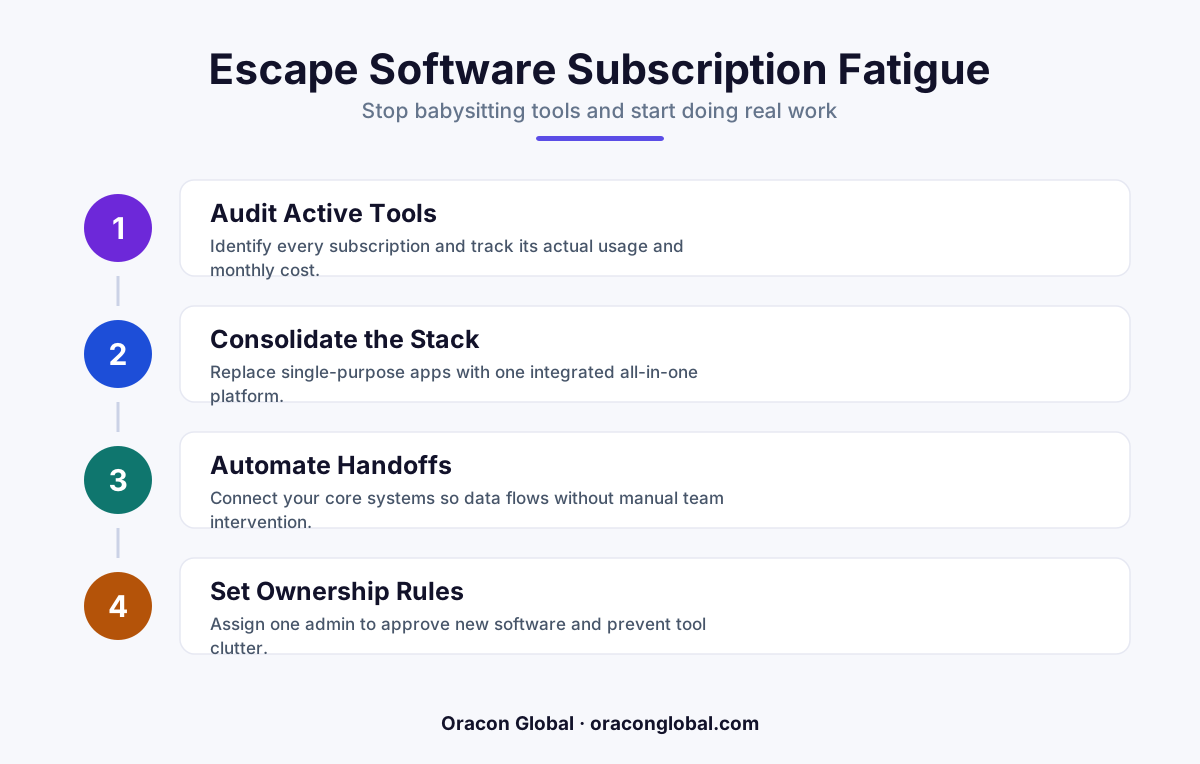
The average modern team is bogged down by managing logins, APIs, and monthly bills for dozens of disjointed SaaS tools. Transitioning to a unified, custom AI workflow layer eliminates subscription bloat and puts your focus back on actual business outcomes.
There was a time when buying a new software subscription felt like a victory. A team member would identify a bottleneck, pull out a company card, and sign up for a shiny new tool. For a few weeks, productivity would seem to tick upward. Then, the reality of managing that tool set in.
Today, many operations leaders look at their tech stacks and feel a quiet sense of dread. Your team is not suffering from a lack of technology. In fact, they are suffering from too much of it. Instead of doing deep, meaningful work, your most talented employees are spending hours logging in and out of platforms, manually moving data between disjointed systems, and troubleshooting API integrations that quietly broke overnight.
This is the hidden tax of SaaS subscription bloat. When every minor task requires a specialized subscription, your team stops being operators and starts acting as administrative caretakers for a sprawling software portfolio. To reclaim their time, businesses must shift from purchasing fragmented tools to building integrated, custom AI workflows.
The Hidden Friction of SaaS Subscription Bloat
On paper, individual software tools look affordable and efficient. In practice, they create a fractured digital environment. When your workflow relies on five different subscription platforms to complete a single business process, friction accumulates rapidly.
Consider a standard client onboarding process. A team member might have to receive a document in one app, extract data using an AI parser tool, upload that data to a customer relationship management (CRM) platform, generate a contract with another document template builder, and trigger a notification in a team chat application.
This approach introduces three critical operational issues:
- The Integration Tax: Off-the-shelf platforms are designed to be general. Connecting them requires complex, fragile automation chains that break whenever one of the vendors updates their system structure or API.
- Context Switching Fatigue: Moving between different interfaces, design languages, and login screens drains mental energy. Your team loses momentum every time they jump to a different browser tab.
- Administrative Overhead: Managing seat licenses, updating expired credit cards, offboarding departing employees from dozen of tools, and auditing monthly software invoices becomes a part-time job in itself.
Why AI Has Made the Subscription Problem Worse
The recent explosion of artificial intelligence tools was supposed to solve operational overhead. Instead, for many companies, it has compounded the issue. The market has been flooded with point-solution AI wrappers—narrow tools that do exactly one thing, like draft an email response, summarize a PDF, or clean up a spreadsheet row.
Because these tools are easy to buy, teams quickly accumulate a dozen different AI subscriptions. But because these tools do not talk to each other or to your core database, your team spends their day copy-pasting data back and forth. You have not automated the work; you have simply introduced a highly sophisticated digital typing pool that requires constant human supervision and SaaS management overhead.
True automation does not live in a browser extension or a separate chat window. It lives quietly inside your core business systems, handling entire processes from end to end without requiring human intervention.
The Alternative: Transitioning to Custom Business Automation
The solution to subscription fatigue is not to buy another dashboard to monitor your subscriptions. The solution is consolidation. By building custom business automation, you can replace a dozen overlapping SaaS platforms with a single, tailored system designed specifically for your operational patterns.
Instead of adapting your company workflows to fit the rigid constraints of five different software vendors, custom software development allows you to shape the technology around your existing, proven processes. This shift transforms your operations from a chaotic web of subscriptions into a streamlined, proprietary asset.
1. Unified Data Pipelines
When you build a custom system, your data stays in one secure place. There is no need for fragile connector apps or manual imports. Information flows seamlessly from customer intake straight into your central database, triggering automated AI processing steps along the way.
2. Zero Seat-License Fees
With traditional SaaS, scaling your team means your software bill grows linearly. With custom software, you own the platform. Whether you have ten employees or five hundred using the system, your operational software costs remain stable, allowing you to scale your margins alongside your headcount.
3. Absolute IP Ownership
Relying on external SaaS means your core business processes are built on rented land. If a vendor changes their pricing, deprecates a feature you rely on, or goes out of business, your operations are at risk. With a custom build, you own 100% of the code and intellectual property.
How to Audit Your Stack for Subscription Consolidation
Transitioning away from subscription bloat does not have to happen overnight. It begins with a practical assessment of what your team actually uses to get their work done. You can systematically identify which tools are driving value and which are merely adding noise.
- Map Your Key Workflows: Trace a single transaction, order, or client from start to finish. Write down every single piece of software a team member has to touch to complete that workflow.
- Identify the Data Bridges: Look for the points in your workflow where a human is manually copying text, downloading a file to re-upload it elsewhere, or manually triggering the next step. These are your prime targets for custom AI integration.
- Calculate the Real Cost: Add up not just the monthly subscription fees of your minor tools, but the estimated hours your team spends managing, configuring, and troubleshooting those tools each month. The result is often eye-opening.
Build a System That Grows With Your Business
Technology should work for your team, not the other way around. If your operators are spending more time managing software settings and troubleshooting integrations than serving your clients or building your products, your tools are standing in the way of your growth.
At Oracon Global, we build custom AI agents, automated workflows, and tailored enterprise systems that fit your business perfectly. Our experienced, senior in-house development team handles the complex engineering, delivering reliable systems where you own the code and the IP from day one.
Ready to clear out the subscription clutter and build a unified system designed for your operations? Get in touch with the team at Oracon Global today to discuss how we can help you streamline your workflows.
Frequently asked questions
Why are AI software subscriptions making my team less productive?
Each new tool adds operational friction, requiring manual data syncing, separate logins, constant context switching, and ongoing billing administration instead of focusing on core work.
How do custom AI workflows differ from off-the-shelf SaaS?
Custom workflows are built around your existing business processes and data, running under a unified system that you fully own without monthly per-seat licensing fees.
Is it expensive to migrate from multiple SaaS tools to a custom system?
While custom development requires an upfront investment, it eliminates recurring subscription fees, reduces API integration failures, and saves hundreds of hours of manual administrative labor.
Who owns the intellectual property of a custom AI system?
When you build custom AI software with a partner like Oracon Global, you retain 100% ownership of the code, database schemas, and intellectual property.
Read next
Beyond Chatbots: How to Build AI Agents That Actually Do Work for Your Business
Most businesses use AI to answer questions. Here is how to build custom AI agents that actually take action, connect to your internal tools, and handle complex workflows.
Beyond the Wrapper: How to Build Custom AI Agents for Business That Actually Work
Many businesses invest in basic AI wrappers only to find they lack the security and context needed for real work. Here is how to build custom AI agents that integrate deeply with your workflows and databases.
Enterprise AI Maintenance Costs: Budgeting for Year Two and Beyond
Building an AI system is only half the battle. Discover the practical, ongoing operational costs of enterprise AI, including token management, model drift, and continuous security audits.
Oracon Global builds production-grade AI agents, automation and apps — and you own the code and IP. Tell us what you want to automate.
Book a call →See our work