

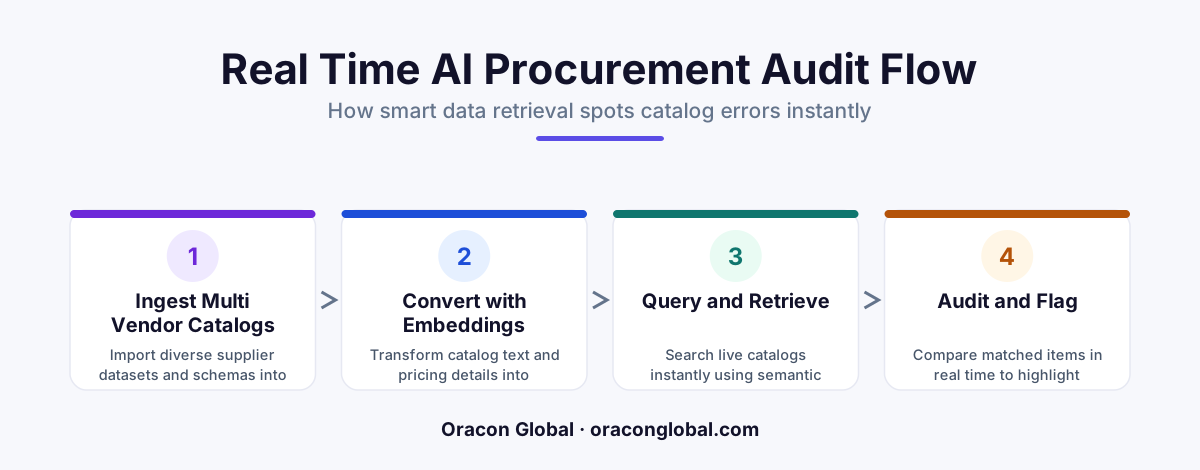
A custom multi-vendor procurement agent uses Retrieval-Augmented Generation (RAG) to instantly compare incoming supplier catalogs against your historical buying data. By acting as an automated auditor, the agent catches pricing, part number, and packaging discrepancies in real time, saving companies from costly ordering mistakes.
Imagine you run a business that buys parts, ingredients, or office supplies from ten different vendors. Every month, these vendors send you updated spreadsheets with thousands of rows of product names, part numbers, packaging units, and prices. One vendor lists a pack of bolts as "100-pack," another calls it "Box of 100," and a third changes the part number entirely without telling you.
Checking these spreadsheets by hand to find errors or price hikes is a slow, painful task. If your team misses a small change, you might order the wrong items or pay double what you expected. This is where a multi-vendor procurement agent can help. By using a smart data-searching method called Retrieval-Augmented Generation, this software helper can audit all your supplier sheets and spot inconsistencies in real time.
In this guide, we will explain how this technology works in plain, simple English, using everyday examples. You do not need any coding experience to understand how this tool can protect your bottom line.
What is a Multi-Vendor Procurement Agent?
A multi-vendor procurement agent is a custom AI digital employee designed to help businesses manage their buying processes. Instead of a human spending hours comparing supplier files, this software does the work in seconds. It can read catalogs, compare prices, and prepare purchase orders across many different suppliers at the same time.
To make this happen, the agent uses Retrieval-Augmented Generation (often called RAG). RAG is a technique that allows an artificial intelligence model to search through your company's private documents—like past invoices, old contracts, and email agreements—before it answers a question or makes a decision. Think of RAG as an open-book exam for the AI. Instead of guessing the answer from memory, the AI looks up the exact page in your business records to find the truth.
The Everyday Analogy: The Expert Personal Grocery Shopper
To understand how an AI procurement agent audits supplier catalog inconsistencies, think of a professional chef hiring a personal grocery shopper.
If the chef says, "Go buy olive oil," a simple helper might grab the first bottle they see, even if it costs three times the usual price or comes in a tiny bottle. But an expert shopper does three things differently:
- They look at the chef's old recipes and past grocery receipts to see what price they usually pay.
- They compare prices across five different local supermarkets in real time.
- They notice if a store silently changed the bottle size from one liter to half a liter while keeping the price the same.
Our custom AI agent does the exact same thing for your business purchases. It does not just read the new catalog; it compares the new catalog against your entire purchasing history to make sure you are getting exactly what you expected.
How the AI Spots Catalog Inconsistencies in Real Time
Supplier databases are notoriously messy. A single supplier might change a part number from "ABC-123" to "ABC123-A" or change the unit of measurement from "ounces" to "grams." A traditional computer system will get confused by these tiny changes and flag them as entirely new products, or worse, ignore them completely.
A custom multi-vendor procurement agent solves this problem using a multi-step process:
1. Reading and Translating the Data
When a supplier uploads a new catalog, the agent reads the document. It does not matter if the catalog is a PDF, an Excel sheet, or a raw text file. The agent translates the messy layout into a clean, standardized format that your business system understands.
2. Retrieving Your Internal Buying Rules
Using RAG, the agent instantly searches your internal records. It looks up what you bought from this supplier last month, what price was agreed upon in your master contract, and what alternative suppliers are charging for the same item.
3. Real-Time Auditing
The agent compares the new catalog with your retrieved records. If it finds a price increase that violates your contract, a part number that does not match your inventory system, or a change in package size, it flags the issue immediately. This all happens before anyone places an order.
A Real-World Example: The Commercial Bakery
Let us look at a concrete business example. Imagine a commercial bakery that buys flour, sugar, and yeast from three different distributors.
Distributor A suddenly sends a new price sheet. They have changed their packaging of flour from "50-pound bags" to "20-kilogram bags" (which is about 44 pounds) but kept the price at fifty dollars.
Without an AI agent, a busy purchasing manager might just see the fifty-dollar price tag, assume nothing has changed, and place the order. The bakery would end up with less flour than they need, disrupting their baking schedule.
With a custom multi-vendor procurement agent running in the background, the agent instantly retrieves the historical conversion rates and past purchases. It notices the weight drop, calculates the new price per pound, flags the hidden 12% price increase, and alerts the manager to buy from Distributor B instead.
Why Custom Software Beats Off-the-Shelf Tools
While there are generic procurement tools on the market, they often struggle with the unique ways your specific business operates. Off-the-shelf software expects every supplier to format their files perfectly, which rarely happens in the real world.
Building a custom agent gives you several distinct advantages:
- Your Rules, Your Way: You can train the agent to understand your specific industry terms, slang, and part numbers.
- Full IP Ownership: At Oracon Global, our clients own 100% of their code and intellectual property. You do not have to pay ongoing, expensive software seat licenses forever.
- Seamless Integration: A custom agent can connect directly to your existing email inbox, ERP system, or inventory databases without requiring you to rebuild your entire workflow.
Taking the Next Step with Oracon Global
Building a custom multi-vendor procurement agent is not about replacing your team; it is about giving them a super-powered assistant that never sleeps and never misses a detail. By letting AI handle the tedious task of auditing catalogs, your team can focus on building stronger relationships with your suppliers and negotiating better deals.
At Oracon Global, our senior in-house team specializes in building custom AI agents, RAG applications, and custom web systems that solve real business problems. We build tools that fit your existing workflows perfectly, ensuring your business stays efficient and secure.
Ready to see how a custom AI digital employee can streamline your procurement process? Contact us at Oracon Global today to discuss your project ideas with our senior developers.
Frequently asked questions
What is a multi-vendor procurement agent?
It is a smart software assistant that automatically manages, compares, and buys goods from many different suppliers at the same time.
How does Retrieval-Augmented Generation help with catalog audits?
Retrieval-Augmented Generation, or RAG, lets the AI pull the latest pricing and product rules from your private files to check if a new supplier catalog contains errors.
Why can standard databases not catch these catalog inconsistencies?
Standard databases only look for exact matches, while suppliers often use different names, spellings, or packaging units for the exact same item.
Do we have to give up control of our buying decisions to the AI agent?
No, you can design the agent to flag inconsistencies and ask a human team member for approval before any purchase order is officially sent.
Read next
Beyond Chatbots: How to Build AI Agents That Actually Do Work for Your Business
Most businesses use AI to answer questions. Here is how to build custom AI agents that actually take action, connect to your internal tools, and handle complex workflows.
Beyond the Wrapper: How to Build Custom AI Agents for Business That Actually Work
Many businesses invest in basic AI wrappers only to find they lack the security and context needed for real work. Here is how to build custom AI agents that integrate deeply with your workflows and databases.
Enterprise AI Maintenance Costs: Budgeting for Year Two and Beyond
Building an AI system is only half the battle. Discover the practical, ongoing operational costs of enterprise AI, including token management, model drift, and continuous security audits.
Oracon Global builds production-grade AI agents, automation and apps — and you own the code and IP. Tell us what you want to automate.
Book a call →See our work