

When an AI assistant transfers a live call to a human specialist, the transition often wipes the client's immediate conversational context. By implementing an event-driven memory bridge, businesses can capture, structure, and instantly sync real-time conversation states directly to the recipient's screen before they pick up.
Imagine a VIP client calling your private wealth firm, premium real estate agency, or luxury concierge service. They spend four minutes detailing a complex, highly specific request to your AI digital employee. The AI understands perfectly, identifies that the request requires a senior human specialist, and initiates a transfer.
But when the human analyst picks up the phone, they start with the standard, frustrating question: "How can I help you today?"
In a single second, the premium experience evaporates. The client is forced to repeat their account numbers, their immediate issues, and their specific constraints. The AI digital employee showed incredible promise, but the transition broke the illusion of a seamless organization.
This is the phone handoff problem. When voice streams transition from an AI workspace to a human workstation, the underlying conversation data often vanishes. To fix this, engineering teams must build an event-driven memory bridge that captures, packages, and routes real-time context ahead of the audio signal.
Why Traditional Phone Transfers Drop the Context
Most enterprise phone setups use old session initiation protocols designed decades before artificial intelligence existed. When a human or an AI transfers a call, the system only sends the audio line and basic caller ID metadata to the destination handset.
Standard software setups keep the conversation history in one silo and the telephone line in another. The AI assistant processes the voice, translates it to text, and works with structured files in a temporary cloud session. Once the transfer button is clicked, that cloud session closes, and the receiving human agent gets nothing but a ringing phone.
To preserve VIP preferences, you need a system where the data moves faster than the phone routing. An event-driven memory bridge ensures that context arrives on the human agent's screen before the phone on their desk even rings.
The Architecture of an Event-Driven Memory Bridge
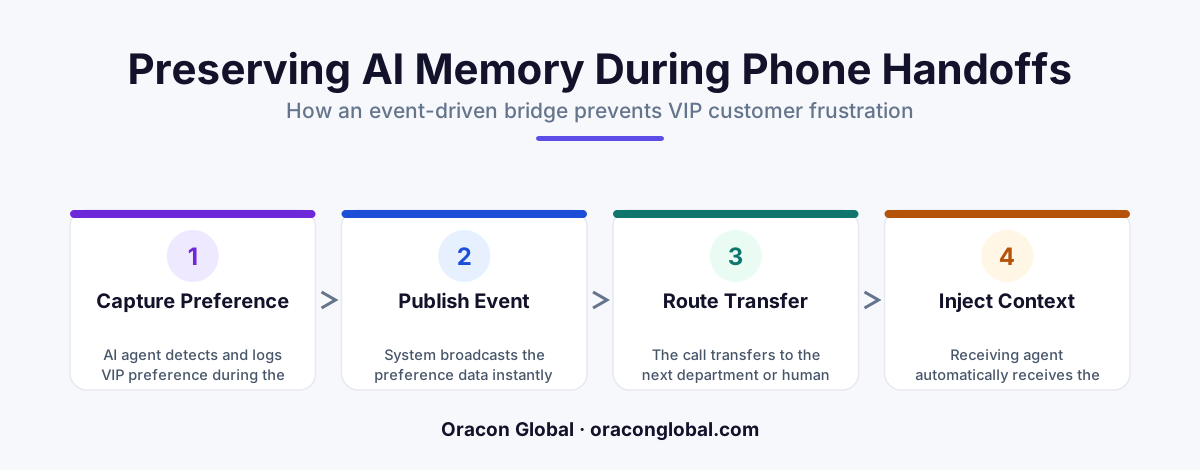
Building a reliable memory bridge requires decoupled architecture. Instead of trying to force large packages of conversational text through a narrow phone line, the system splits the voice signal and the data signal into two parallel paths. Here is how the workflow functions behind the scenes:
- Continuous Event Capture: As the client speaks with the AI, an orchestration layer listens to the live transcription stream. It extracts key entities, explicit preferences, and immediate customer sentiment in real time.
- State Serialization: When the AI decides a human transfer is necessary, it pauses and packages the active session state. This file contains the client's verified identity, their expressed goals, and their specific constraints.
- The Event Broker: The system publishes a "Handoff Initiated" event to a central message broker. This broker handles the data routing instantly, ensuring it bypasses any delays in the telephony network.
- Agent Dashboard Hydration: The receiving agent's customer relationship management (CRM) dashboard listens for this specific event. The moment the event is detected, the dashboard automatically opens the client's file and displays a clean summary of the AI conversation.
An elegant memory bridge ensures that when the human specialist picks up the handset, their very first sentence is: "Hello Mr. Vance, I see you are looking to adjust your portfolio allocation for the upcoming quarter. Let us get that handled for you immediately."
Key Components of a Reliable Memory Bridge
To construct this setup without causing system lag or dropping calls, your development team needs to implement three core software blocks.
1. Real-Time Entity Extraction
You do not want to hand your human team a massive transcript of a ten-minute conversation. They do not have the time to read it while greeting a live caller. The AI must extract high-value metadata on the fly. This includes account identifiers, specific product names, and highlighted emotional indicators.
2. Telephony State Listeners
Your systems must know exactly where the call is at any microsecond. By leveraging webhooks from modern cloud communication tools, your applications can detect when a call is placed in a queue, when a specific human agent's line starts ringing, and when the call is successfully connected.
3. Light Cache Storage
Because database writes can sometimes experience latency spikes, the active conversation state should be written to a fast, local memory cache first. This guarantees that even if your primary database is experiencing a high traffic volume, the crucial handoff data is delivered to the screen in milliseconds.
Preventing Race Conditions During High-Volume Shifts
A common engineering hurdle when deploying an event-driven memory bridge is the "race condition." This occurs when the audio transfer completes faster than the database can process and display the conversation state on the agent's computer screen.
To prevent this, the software must utilize a delayed-release mechanism on the phone line. When the AI initiates the transfer, the event-driven system sends the data packet to the agent's workstation first. The actual phone routing is held back by a fraction of a second—just long enough for the dashboard to render the client summary, but short enough that the caller notices no hesitation on the line.
Building Customer Trust Through Seamless Tech
Your clients do not care about the complexities of your cloud systems, database schemas, or phone APIs. They only care about feeling recognized and valued by your business.
When you build a dedicated memory bridge, your AI digital employees stop feeling like isolated tech experiments and start behaving like highly integrated, professional members of your operations team. You protect your brand's reputation, eliminate customer frustration, and empower your human staff to do their best work with all the facts right in front of them.
At Oracon Global, our senior in-house engineering team designs and delivers robust AI integrations, custom workflow automations, and scalable application architectures for businesses worldwide. If you are ready to build reliable AI infrastructure that protects your customer experience, contact Oracon Global today to discuss your project.
Frequently asked questions
Why do AI assistants forget customer details during phone transfers?
Standard telecom platforms treat voice channels and data platforms as completely separate systems, which drops the AI's temporary session context during a transfer.
What is an event-driven memory bridge?
It is a middleware layer that captures real-time data events from an active conversation and securely routes them to a target database or dashboard before a call is handed off.
Does this require rebuilding our existing phone system?
No, an event-driven memory bridge integrates with your current telephony APIs and CRM, acting as an intelligent router between them.
How does this improve the VIP client experience?
It eliminates the need for high-value clients to repeat their account details, preferences, or frustration to a human agent after speaking with an AI assistant.
Read next
Beyond Chatbots: How to Build AI Agents That Actually Do Work for Your Business
Most businesses use AI to answer questions. Here is how to build custom AI agents that actually take action, connect to your internal tools, and handle complex workflows.
Beyond the Wrapper: How to Build Custom AI Agents for Business That Actually Work
Many businesses invest in basic AI wrappers only to find they lack the security and context needed for real work. Here is how to build custom AI agents that integrate deeply with your workflows and databases.
Enterprise AI Maintenance Costs: Budgeting for Year Two and Beyond
Building an AI system is only half the battle. Discover the practical, ongoing operational costs of enterprise AI, including token management, model drift, and continuous security audits.
Oracon Global builds production-grade AI agents, automation and apps — and you own the code and IP. Tell us what you want to automate.
Book a call →See our work