

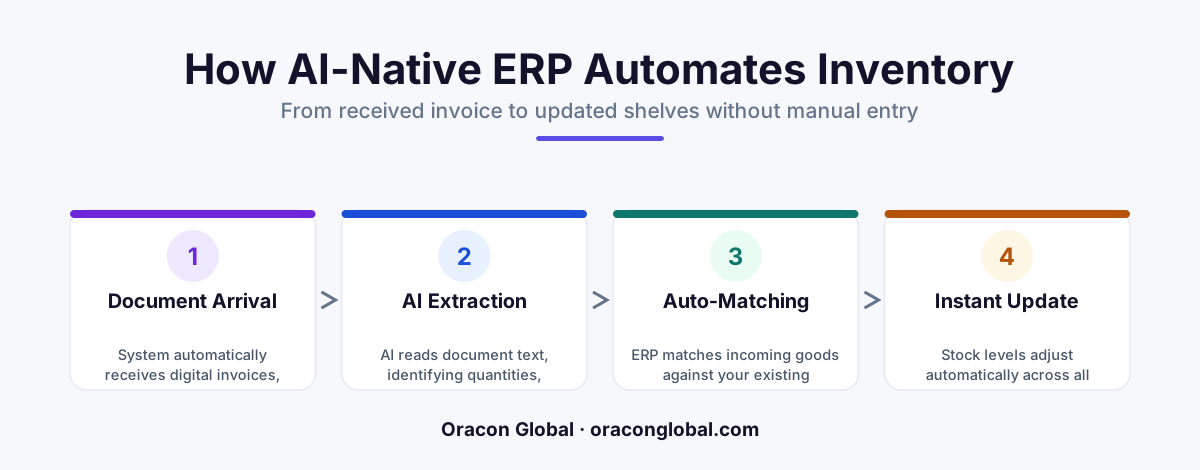
An AI-native ERP is a modern business management system built from the ground up with artificial intelligence. Instead of requiring employees to type in stock levels, it uses smart software to read documents, track shipments, and update inventory automatically. This eliminates manual data entry, cuts down on human error, and keeps your stock numbers perfectly accurate in real time.
If you run a business that handles physical products, you know the daily headache of tracking stock. Every time a new shipment arrives at your warehouse, someone has to sit down, open a spreadsheet or an old database, and type in the new numbers. This process is called manual data entry, and it is one of the biggest bottlenecks in modern business.
When people get tired, they make typos. A shipment of 500 units accidentally gets typed in as 50, or a decimal point lands in the wrong place. Suddenly, your system says you are out of stock when your shelves are full, or worse, you sell items you do not actually have.
This is where an AI-native ERP comes in. It is a new way of running a business that handles these tedious tasks for you, keeping your stock numbers perfectly accurate without requiring your team to spend hours typing on a keyboard.
What Is an AI-Native ERP?
Before we look at how it helps with inventory, let us define what this technology actually is. We will break it down into two parts:
- ERP (Enterprise Resource Planning): This is a fancy term for a central software system that connects all the different parts of your business, like sales, warehousing, purchasing, and finance, so they can talk to each other.
- AI-Native: This means the software was built from day one with artificial intelligence inside it. It is not an old legacy system with a basic chatbot glued onto the front. Instead, the AI acts as the core engine that drives the software.
Think of a traditional ERP like a standard bicycle. You have to peddle it yourself to make it move. An AI-native ERP is like a smart electric car. It has its own built-in motor, sensors, and navigation system to help steer you in the right direction with minimal effort on your part.
The Old Way vs. The AI-Native Way
To understand the power of automated inventory tracking, let us look at a simple everyday example: receiving a shipment of new kitchen appliances at a warehouse.
The Old Way: The Paper Trail
A delivery truck arrives. The driver hands your warehouse manager a paper packing slip. The manager walks around the pallets, counts the boxes, and scribbles notes on the paper. Later that afternoon, the manager sits at a desk and manually types the product codes and quantities into the computer. If they get interrupted by a phone call, they might skip a line or double-count a box. The system remains outdated until that typing is complete.
The AI-Native Way: Zero-Touch Entry
The delivery truck arrives. The digital packing slip is sent to your company email. The AI-native ERP automatically opens the email, reads the PDF document, and understands exactly what arrived. It matches the packing slip with your original purchase order to ensure you received the correct items. Instantly, the system updates your online store and warehouse records. No typing, no paper, and no delays.
How It Works: Under the Hood of Automated Inventory Tracking
You do not need a computer science degree to understand how this software works. An AI-native ERP relies on a few key technologies working together behind the scenes to handle manual data entry automation:
1. Document Understanding (OCR and LLMs)
Optical Character Recognition (OCR) is a technology that turns images of text into digital text your computer can read. When a supplier sends an invoice or a photo of a receipt, the AI uses OCR combined with a Large Language Model (LLM)—the same technology that powers modern AI assistants—to read the document just like a human would. It understands that "QTY 100" means you received one hundred items, even if different suppliers use different layouts for their invoices.
2. Smart AI Agents
An AI agent is a small, specialized software program designed to do one specific job autonomously. In an AI-native ERP, you might have one agent that monitors your email inbox for supplier delivery notes, another agent that verifies shipping prices, and a third agent that updates your database. They work together like a quiet, invisible back-office team.
3. Real-Time Database Syncing
In older systems, databases only update once a day, usually overnight. A smart ERP updates everything in real time. The moment a sale is made on your website, or a box is scanned at your loading dock, the entire system updates instantly across all your offices and warehouses.
Real-World Use Case: Managing a Growing E-Commerce Brand
Let us look at a practical business scenario. Imagine you run a business that sells outdoor gear online. You have three warehouses across the country and sell on five different online marketplaces.
Without an AI-native ERP, keeping track of your stock is a nightmare. If a customer buys the last tent on one platform, you have to manually log in to the other four platforms to mark that tent as sold out. If you do not do it fast enough, another customer will buy it, and you will have to send an embarrassing apology email refunding their money.
With an AI-native ERP, the system acts as your central brain. The moment a tent sells on any platform, the AI immediately updates the stock levels across all your online storefronts. If the stock of tents drops below ten, the AI automatically drafts a purchase order to your manufacturer, calculates the shipping cost, and presents it to you for a quick one-click approval. It keeps your business running smoothly while you focus on growing your brand.
Why Businesses Are Moving Away from Manual Data Entry
Investing in AI in supply chain management is not just about using cool new technology. It is about saving time, protecting your margins, and reducing stress for your employees. Here are the main benefits of making the switch:
- Fewer Costly Mistakes: Typing mistakes cost money. Eliminating manual data entry means your records are accurate, preventing over-ordering or missed sales.
- Happier Employees: Nobody goes to school dreaming of typing numbers into spreadsheets all day. By automating repetitive tasks, your team can focus on creative work, customer service, and growing the business.
- Better Decision Making: When your inventory data is updated in real time, you can make smart decisions based on true facts, not guesses from last week's reports.
How to Get Started with an AI-Native ERP
You do not have to throw away your current systems and start from scratch. A senior development team can build custom AI tools that connect directly into your existing setup, giving you the power of modern automation without the headache of a massive IT overhaul.
At Oracon Global, our experienced in-house team builds custom AI-native ERP systems, automated workflows, and smart digital employees tailored specifically to how your business operates. Best of all, when we build custom software for you, your business owns 100% of the code and intellectual property. This means no monthly user fees, no vendor lock-in, and total control over your business technology.
Would you like to see how an AI-native ERP can save your team hours of manual work every week? Get in touch with us at Oracon Global today to discuss how we can help automate your inventory and back-office operations.
Frequently asked questions
What is an AI-native ERP?
An AI-native ERP is a central business management software system designed with built-in artificial intelligence that automates daily operations like data entry and inventory tracking.
How does automated inventory tracking work without human typing?
The system uses smart AI tools to read incoming delivery PDFs, match them with purchase orders, and update stock numbers in your database automatically.
Do we have to replace our entire software setup to use an AI-native ERP?
No, modern AI-native ERP systems can be custom-built to connect directly with your existing tools, databases, and warehouse systems without disrupting your business.
Who owns the code and technology when Oracon Global builds an ERP?
Your business owns 100% of the custom code and intellectual property, ensuring you are never locked into a specific vendor or subscription fee.
Read next
Beyond Chatbots: How to Build AI Agents That Actually Do Work for Your Business
Most businesses use AI to answer questions. Here is how to build custom AI agents that actually take action, connect to your internal tools, and handle complex workflows.
Beyond the Wrapper: How to Build Custom AI Agents for Business That Actually Work
Many businesses invest in basic AI wrappers only to find they lack the security and context needed for real work. Here is how to build custom AI agents that integrate deeply with your workflows and databases.
Enterprise AI Maintenance Costs: Budgeting for Year Two and Beyond
Building an AI system is only half the battle. Discover the practical, ongoing operational costs of enterprise AI, including token management, model drift, and continuous security audits.
Oracon Global builds production-grade AI agents, automation and apps — and you own the code and IP. Tell us what you want to automate.
Book a call →See our work